SNRC with its immense experience & skill in Japanese language, culture & etiquettes has been successfully offering the Japanese Business Etiquettes program.
Why Japanese Business Etiquette Matters?
Many professionals assume that success with Japanese clients depends primarily on technical expertise or language ability.
In reality, cultural understanding often plays an equally important role.
Japanese business relationships are built on trust, consistency, preparation and mutual respect. Small details that may seem insignificant in other business environments — arriving a few minutes early, exchanging business cards correctly, or understanding seating arrangements during meetings — can leave a lasting impression.
Over the years, SNRC has interacted with professionals from IT, manufacturing, engineering, consulting and service industries who discovered that understanding Japanese business expectations helped them communicate more effectively and build stronger relationships.
A good understanding of Japanese business etiquette helps professionals avoid common mistakes, work more confidently with Japanese teams, and develop long-term professional credibility.
What Participants Learn During the Program
This program focuses on practical situations that professionals regularly encounter while working with Japanese colleagues, customers and business partners.
Meishi Koukan – The Business Card Ritual
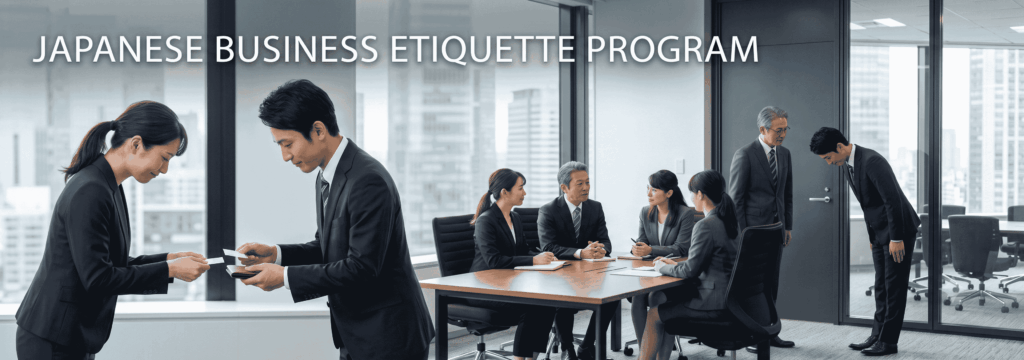
In Japan, a business card is treated as an extension of the individual. Participants learn the proper way to present, receive and handle business cards during professional interactions.
Understanding Bowing Etiquette
Bowing is far more than a greeting. Different situations call for different levels of formality. Participants gain insight into when and how bowing is used in professional environments.
Conducting Effective Meetings with Japanese Teams
Participants learn about meeting preparation, introductions, seating arrangements, communication styles and follow-up expectations commonly seen in Japanese organisations.
Understanding Japanese Communication Styles
Japanese communication often places emphasis on harmony, respect and indirect expression. Learning to interpret these nuances can significantly improve workplace interactions.
Gift Giving, Hospitality and Professional Courtesy
Participants gain an understanding of common expectations surrounding gifts, hospitality and social interactions in Japanese business settings.
Workplace Professionalism and Expectations
Topics such as punctuality, preparation, personal presentation and attention to detail are discussed through practical examples drawn from Japanese corporate culture.
Given above are few of the aspects involved.
Whatsapp us at 8904390300 / Email (info@snrc.co.in) for a detailed proposal for your specific requirement.
Who Should Attend This Program?
This program is especially valuable for:
- IT professionals working with Japanese clients
- Engineers supporting Japanese projects
- Delivery and Project Managers
- Business Development professionals
- HR and Learning & Development teams
- Customer-facing teams
- Professionals travelling to Japan for work
- Organisations engaging with Japanese customers or partners
Benefits of Japanese Business Etiquette Training
Professionals often discover that technical expertise alone is not enough when working with Japanese customers or stakeholders.
A strong understanding of Japanese business etiquette can help:
- Build trust faster with Japanese clients
- Improve communication during meetings and presentations
- Reduce cultural misunderstandings
- Create a more professional impression
- Improve collaboration with Japanese teams
- Support business growth in Japanese markets
Many organisations find that even small improvements in cultural awareness lead to stronger working relationships and more productive engagements.
Frequently Asked Questions
No. The program focuses on business culture, professional behaviour and interaction practices rather than language proficiency.
Absolutely. Many participants use these skills while working remotely with Japanese clients and colleagues.
Yes – 100%. The content can be adapted to suit IT, engineering, manufacturing, consulting and other industries.
Yes. Both online and onsite delivery options are available depending on organisational requirements.